
What is Generative AI? Everything You Need to Know
In contemporary years, there has been a huge improvement within the world of Artificial intelligence (AI). One such development is the emergence of generative AI, an effective technology that can be revolutionizing several industries. In this text, we’re able to delve into the world of generative AI and find out its potential programs, blessings, and demanding situations. So, without further delay, let’s get started!
What is Generative AI?
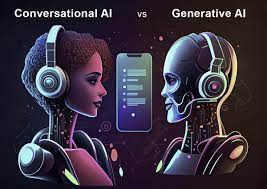
Generative AI is a department of synthetic intelligence that makes a specialty of device studying models capable of growing new and specific content material, which encompasses photos, track, text, or even movement photographs. Unlike traditional AI fashions that depend upon pre-programmed guidelines, generative AI uses deep getting-to-know techniques to have a look at massive quantities of statistics and generate new content based on that getting-to-know.
How Does Generative AI Work?
Generative AI, collectively with generative adverse networks (GANs) and variational autoencoders (VAEs), generates artwork with the aid of learning from a massive dataset and then using that expertise to generate new content. GANs embody two neural networks: a generator community that creates new content, and a discriminator network that evaluates the generated content fabric and compares it with the facts. This feedback loop between the generator and discriminator networks lets in the splendor and authenticity of the generated content material over time.
Applications of Generative AI
Generative AI has a wide variety of programs in various industries. Some of the excellent applications include
- Art and Design: Generative AI can create particular and real works of art, and designs, and see results that have been previously most effective and viable through human creativity. Artists and designers can leverage generative AI to discover new inventive opportunities and push the bounds of their creativity.
- Entertainment: Generative AI may be used in the appearance of video video games, virtual fact critiques, and exclusive forms of interactive entertainment. By generating sensible and immersive virtual worlds, generative AI complements the general gaming enjoy.
- Content Creation: Content creators can rely on generative AI to automate producing text, together with articles, blog posts, and product descriptions. This not only saves time but also ensures outstanding and tasty content material.
- Healthcare: Generative AI has the potential to help in clinical analysis and remedy. It can analyze medical records, which incorporates imaging scans and affected person facts, to offer correct and timely insights for healthcare experts.
- Gaming: The main trend in the gaming industry is the powerful development of AI which helps in the creation of games where people would believe that they live in a real environment. It can produce dynamic environments, characters, and even storyline elements.
- Music and Sound: Generative AI is capable of creating original music as well as creating high-quality sound effects for different media productions. It serves as a powerful weapon in the musician’s and sound designer’s tool chest as they seek to create unique sound-related experiences.
- Virtual Reality (VR) and Augmented Reality (AR): Using Generative AI as a standardized set of application interfaces opens multiple possibilities in VR and AR experiences that generate realistic and interactive virtual environments. It facilitates the development of real-world simulations and virtual worlds.
Benefits of Generative AI
Generative AI offers numerous advantages, on the side of
- Creativity and Innovation: Generative AI allows the introduction of novel and progressive content material cloth that pushes the bounds of human creativity. It can assist artists, designers, and content creators in exploring new possibilities and generating specific thoughts.
- Efficiency and Automation: By automating content material era and other repetitive obligations, generative AI allows keep time and assets. This lets people and organizations to interested in greater complicated and price-added sports.
- Personalization: Generative AI fashions can generate content material tailor-made to man or woman alternatives and requirements. This degree of personalization enhances user revel in and engagement.
Challenges in Generative AI
Although generative AI has significant capacity, it also poses some demanding situations. Some of the primary challenges include:
- Ethical Concerns: As generative AI fashions turn out to be greater, there are issues regarding the ethical use of generated content cloth, inclusive of deepfake motion images and fake statistics articles. Ensuring the accountable and moral use of generative AI remains a crucial challenge.
- Data Bias: Generative AI fashions carefully rely upon the nice and kind of training facts. Biases present in the schooling facts can bring about biased and unfair outputs, reinforcing present societal biases. Overcoming statistics bias is critical to ensure fairness and inclusivity.
- Lack of Control: As generative AI models grow to be more complex, it will become difficult to apprehend and manipulate the generation manner. This lack of control increases worries approximately duty and capacity misuse of generative AI.
Advantages of Generative AI
Generative AI offers several advantages that make it a valuable tool in various domains: Things such as the broken computer monitor, a dog peeing on some random book from thousands of other books in an attempt to mark his territory and above all piles of dirty dishes are secondary details that do not go well with the overall design.
1. Creativity: Generative AI is capable of producing creative writing that can be used as the source for new ideas and concepts. It has the potential to extend and even surpass limits, which would be possible only with traditional human creativity.
2. Efficiency: Generative AI can automate the content generation process, thereby greatly reducing the time and effort it takes for original material creation. This enables content creators to concentrate on the more significant issue.
3. Personalization: Generative AI can produce customized content according to preferences and choices. It can take into consideration individual tastes and preferences, thus going a long way in providing content that appeals to the targeted audience.
4. Endless possibilities: With generative AI, the limits are almost nonexistent. It produces infinite variations and alternatives that carry out trial-and-error activities in the process of content production.
The Working of Generative AI in Customer Service.
Generative AI utilizes deep learning algorithms that are networked to produce content. These algorithms are trained over large data sets of available historical customer servicing material such as the interactions customers had with agents in forums, chat sessions; product descriptions or support articles to learn patterns styles, and language used.
The generative AI system can learn after training and then be capable of analyzing customer queries or prompts to produce satisfactory responses that are relevant as well as contextually appropriate. The content created may be in text, voice, and even graphic form based on the application.
How Generative AI is Creative a Work
• Generative AI
Generative AI, or creative artificial intelligence in general terms refers to the use of machine learning algorithms and techniques that create content such as images, music even text that closely mimics human-made work. Unlike the AI systems based on pre-programmed rules, generative A.I have the potential to learn from huge datasets, identify patterns, and produce something new. Its imitation of human novelty is what makes it different from other AI methods.
• Enhancing Artistic Creations
Generative AI has created a new realm of opportunities for artists, creative professionals, and virtually anyone else with an interest in art. Artists can now produce amazing works of art that used to be considered impossible with the help of deep learning algorithms. Generative AI allows artists to explore various approaches, methods and types of art thus challenging the very essence of their creativity.
For instance, generative AI can help artists create their own unique digital artworks by combining different styles or coming up with music compositions that crossover genres. This gives artists’ novelty, inspiration, and creative approach a chance to break into new spheres where they find their place in the art world.
• Increasing design and innovation.
Generative AI, likewise has a huge effect on the design and innovation fields. With the help of AI, designers can develop designs that are new and unique in addressing individual user requirements. No matter if it comes to designing a car or inventing a new product and even creating the latest in architecture generative AI helps to better explore hundreds of design options.
For example, architects can use generative AI to produce several design variants and pick the best one according to certain parameters. This not only saves time and resources but also ensures that the designs are functional as well as aesthetically pleasing. Likewise, product designers can employ generative AI to develop unique prototypes and simplify the design process.
• Revolutionizing Content Creation
In content creation, generative AI has proven to be a force. In terms of producing content, generating attention-grabbing articles and social media posts is one aspect where generative AI has shown its capability to produce quality material that attracts readers.
Generative AI algorithms can be used by content creators and journalists to conduct research, fact-check, or even brainstorm for ideas. This frees them of the manual chores and allows creators to pay more attention to developing stories or narratives, delegating tedious tasks such as content generation to artificial intelligence.
• Facilitating Cooperation and Cocreation
Collaboration and co-creations between humans and machines can be promoted by generative AI. Hence, human beings can enjoy the power of knowledge and creativity brought to them by AI integrating with generative AI algorithms.
For instance, a writer can use generative AI to help with idea generation when brainstorming ideas, or get out of writer’s block; and one could even alter the storyline if it is required. When we merge human creativity and suggestions with AI, writers can improve the quality of their works and create great pieces popular among readers.
Customer Service Applications of Generative AI
1. Virtual Assistants: Generative AI virtual assistants can answer basic customer questions, offer product suggestions, and help with order tracking. They can be programmed to mimic human conversations hence they become a perfect fit for the customer environment.
2. Automated Email Responses: The use of generative AI allows for the automatization of email responses to routine customer questions, thus reducing manual workload by agents. This guarantees timely and nonvariable client communication.
3. Real-Time Translations: Generative AI can help in translation during customer interactions which may be done on the spot thus breaking language barriers and enabling international businesses to access a broader set of customers.
4. Sentiment Analysis: By analyzing how customers feel through their interactions with the AI, generative AI can give information on consumer satisfaction levels which can be used by organizations to identify weaknesses and improve customer service strategies.
Uses of Generative AI Models
- Image and Video Generation
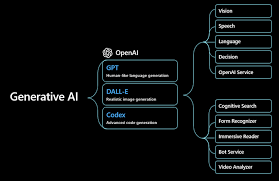
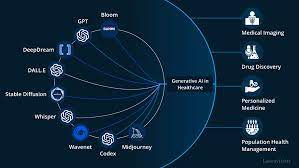
The generation of images and videos has been revolutionized by Generative AI models. They can produce high-quality photos that appear amazingly real hence they are very useful to designers, artists, and advertisers. For instance, these models can produce realistic characters for video games or photorealistic landscapes supplied to virtual reality experiences. They can also automate video editing and special effects thus reducing both time and effort.
- Creative Writing and Text Generation are fields of study.
Another field that generative AI models perform well in is text generation. Such models can even generate stories, poems, or code fragments that are coherent and contextually relevant. They can also be utilized to provide automated content creation for websites or individualized recommendations pertaining to users. Using generative AI models in the realm of creative writing practically opens up endless possibilities.
- Composition and sound generation.
Generative AI models have advanced greatly in the domain of music composition. They are able to study pre-recorded songs, detect recurring patterns in them, and create new compositions that fit a certain style. Such models may help musicians in the creation process or even generate original soundtracks for movies and video games.
- Ethical Considerations and Challenges
Just like any new technology, generative AI models raise some ethical issues and challenges. One major issue is copyright infringement because the models can produce content that closely resembles protected works. Moreover, there is a chance to abuse generative AI models like creating deep fake videos or disseminating fake news.
Additionally, biases found in the training data that is used to train these models can be reflected in the generated content. This, however, raises concerns about possible discriminatory practices and the propagation of bias. Developers and researchers should understand the need to address these problems in order for generative AI models to be used responsibly and ethically.
- Generative AI Models on the Way Ahead.
Generative AI models have enormous scope for innovation and creativity. With continuous technological development, these models will definitely become more complex and powerful. Development in the future might include better context understanding leading to superior text generation, fine-tuned image and video synthesis, as well as music composition.
Thus, ethical concerns about generative AI models will get increasingly prominent with their growing functionalities. Setting strong regulations and policy to control for misuse while seeking to understand the potential effect on society will be necessary.
Conclusion
Generative AI is reworking the way we create, innovate, and interact with technology. Its capacity to generate new and precise content has massive capability in several industries, along with artwork, leisure, healthcare, and content material advent. However, this period additionally offers morally demanding situations and the want for responsible and accountable use. As generative AI continues to evolve, it is crucial to navigate those challenges even as harnessing its advantages for the betterment of society.