
Reacts Features: Empowering Front-End Development
Are you searching for an effective JavaScript library for constructing user interfaces? Look no further than React.Js!
ReactJS, a famous JavaScript library developed and maintained by Facebook, has revolutionized the manner we construct user interfaces for Internet applications. With its powerful features and flexible structure, ReactJS has ended up a cross-to preference for front-end builders globally. It has gained great recognition amongst developers due to its excellent functions and ease of use.
In this article, we can delve into the diverse capabilities presented by React.Js and apprehend why it has ended up being the move-to desire for lots of builders worldwide.

React-JS
React.Js is a popular JavaScript library used for building consumer interfaces. It evolved via Facebook and has gained good-sized traction in the net development network. This essay aims to explore the core features of React.js and their importance in modern internet development.
Overview of React.Js
React.Js became first delivered by way of Facebook in 2013 and has given that gone through considerable development and development. At its middle, React.Js is primarily based at the ideas of efficiency, simplicity, and reusability. It makes a speciality of creating a seamless user experience via effectively updating and rendering components at the internet web page.
React.Js Features
React.Js comes packed with features that make it a favored desire for builders searching to construct dynamic and interactive consumer interfaces. Let’s explore a number of these capabilities in element:
Virtual DOM
React.Js utilizes a virtual DOM (Document Object Model) as opposed to manipulating the actual DOM without delay. The digital DOM is a lightweight representation of the actual DOM and lets React update and render additives effectively. By utilizing a virtual DOM, React minimizes the wide variety of direct manipulations to the DOM, resulting in progressed overall performance and faster rendering of UI components.
Component-Based Architecture
React employs a factor-based total structure that allows developers to divide the user interface into reusable, self-contained components. Each component can be easily managed, updated, and reused, making development extra green and less vulnerable to mistakes. This approach affords better organization and enhances code reusability, leading to more maintainable and scalable applications.
JSX Syntax
ReactJS introduced JSX, a syntax extension of JavaScript, which permits developers to write down HTML-like code straight away in JavaScript. This seamless integration of markup and logic enables simpler visualization and comprehension of additives. JSX empowers builders to efficaciously map UI components and write concise, declarative code.
Unidirectional Data Flow
React follows unidirectional information go with the flow, additionally called one-way binding. In this architectural pattern, statistics flow in a single direction, from determining additives to child components. This method enhances data consistency and predictability, making it less complicated to trace potential bugs and manage software state.
Reusable Components
React.Js promotes the concept of reusable additives, allowing developers to encapsulate UI factors into standalone modules. These reusable additives may be effortlessly imported and utilized in distinct components of a utility, decreasing redundancy and enhancing code maintainability. With a Reacts factor-primarily based structure, developers can build libraries of reusable components for future projects, saving time and effort.
Performance Optimization
React.Js offers numerous performance optimization techniques to make certain fast and efficient rendering of additives. It utilizes a reconciliation set of rules called “diffing” to become aware of and update best the necessary components when adjustments arise. Additionally, React gives gear to optimize rendering based on particular eventualities, inclusive of lazy loading and code splitting, permitting builders to create high-appearing applications.
Declarative UI: Simplifying Development Process
One of the middle ideas of ReactJS is its declarative nature. Unlike traditional JavaScript frameworks, in which developers ought to control the DOM immediately, ReactJS permits them to create reusable UI additives. These additives encapsulate the common sense and visual factors of a consumer interface, making it easier to keep and replace.
By the usage of a declarative technique, ReactJS takes care of successfully rendering and updating the UI primarily based on adjustments in data. This simplifies the improvement method, as builders can be aware of writing smooth and concise code without demanding approximately the underlying rendering of common sense.

React Hook: Managing State and Side Effects
Simplifying State Management and Side Effects React Hooks introduces a modern manner of managing stateful logic and aspect outcomes in practical components. Let’s explore two vital React Hooks: useState and use effect-
Use State: Simplifying State Management
With the state Hook, handling country inside useful additives has by no means been simpler. Traditionally, state control become special to elegant components, however, useState brings this capability to useful components. It allows developers to claim state variables and get entry to them using array destructuring.
By updating country variables with the useState Hook, React robotically re-renders the element, reflecting the changes in the UI. This handy technique minimizes code and imparts a clean and intuitive way to control the state.
UseEffect: Handling Side Effects
The useEffect Hook enables developers to handle side effects within practical additives. Side outcomes talk over tasks such as information fetching, subscriptions, or DOM manipulation that need to arise after rendering.
By using useEffect, you could specify when and the way facet consequences ought to be caused, ensuring predictable conduct. With useEffect, you have great-grained control over while your side effect runs, permitting you to address complex scenarios conveniently. This hook eliminates the need for lifecycle techniques in class components, simplifies the code structure, and enhances overall developer enjoyment.
Context API: Simplifying State Management
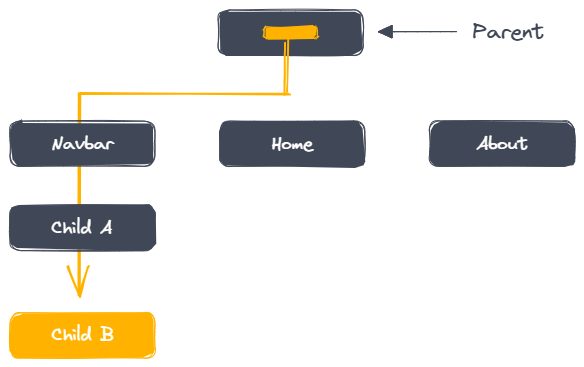
ReactJS gives the Context API to cope with the challenges of prop drilling, which takes place when information desires to be passed through a couple of stages of components. The Context API acts as a centralized keep, providing a problem-free data flow mechanism.
By using Context API, you could share state statistics across distinct components efficiently. It removes the want to pass props through middleman additives, improving code clarity and reducing improvement time. This function is particularly useful in big-scale programs wherein components want to get entry to shared records.
Conclusion
ReactJS empowers developers with its notable capabilities, inclusive of the element-based total structure, the Virtual DOM, JSX, React Hooks, and Context API. By leveraging those functions and adopting ReactJS, builders can build responsive and interactive web programs correctly. The lightweight markdown language of ReactJS streamlines the improvement manner, ensuring code reusability, overall performance optimization, and efficiency.
So, why wait? Level up your web development competencies with ReactJS and witness the transformative energy it brings to your tasks.